
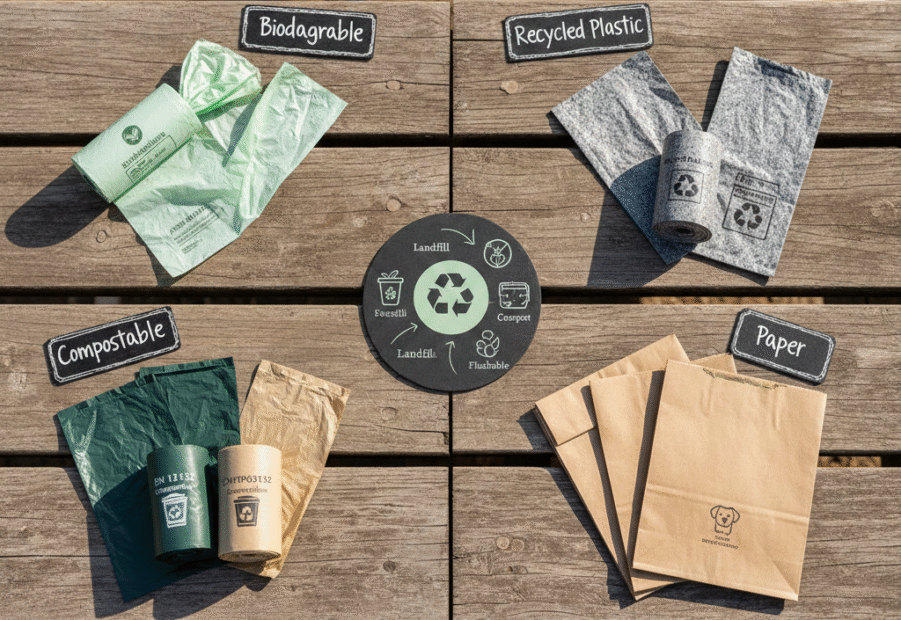
Hey there, eco-conscious dog parents! If you’re reading this, you likely already know that traditional plastic poop bags pose a significant environmental challenge. In 2025, there are plenty of sustainable alternatives that keep your walks green without sacrificing convenience or hygiene. In this guide, we’ll break down the most popular types of dog poop bags: biodegradable, compostable, recycled, and paper and help you make an informed, eco-friendly choice.
By the end, you’ll know which material aligns with your values and lifestyle, and why switching could make a real difference for our planet.
Table of Contents
- Why Choosing the Right Poop Bag Matters
- Biodegradable Dog Poop Bags
- Compostable Dog Poop Bags
- Recycled Plastic Dog Poop Bags
- Paper Dog Poop Bags
- How to Choose the Best Bag for Your Needs
- Pro Tips for Eco-Friendly Dog Waste Management
- Conclusion
Why Choosing the Right Poop Bag Matters
Let’s face it dog poop bags are not just a convenience item; they’re a small but powerful way to reduce your pet’s environmental footprint.
Traditional plastic bags can take over 100 years to decompose in landfills, often breaking down into microplastics that contaminate soil and waterways. By switching to eco-friendly bags, you help reduce landfill waste, cut microplastic pollution, and encourage responsible pet care.
Biodegradable Dog Poop Bags
Biodegradable bags are usually made from plant-based materials like corn starch or vegetable oils. They break down faster than standard plastic bags, but the key point is: they need specific conditions to degrade properly.
Pros:
- Easier on landfills than regular plastic.
- Usually stronger than paper alternatives.
- Readily available in most pet stores.
Cons:
- Can take months to degrade in natural environments.
- Some “biodegradable” bags still contain small amounts of plastic.
💡 Tip: Check the bag’s certification look for ASTM D6400 or EN 13432 labels to ensure real biodegradability.
Compostable Dog Poop Bags
Compostable bags are a step up: they break down completely into organic matter under the right composting conditions. Many are made from PLA (polylactic acid), cornstarch, or other plant-based materials.
Pros:
- Fully compostable if sent to industrial composting facilities.
- Reduces landfill methane emissions.
- Leaves no toxic residues.
Cons:
- Home composting is tricky; dog waste carries pathogens, so it usually requires industrial composting or special bins.
- Slightly more expensive than biodegradable or recycled options.
💡 Tip: Pair with a small-scale dog waste digester or community compost program to maximize eco benefits.
Recycled Plastic Dog Poop Bags
Made from post-consumer recycled plastics, these bags reuse material that would otherwise end up in landfills.
Pros:
- Strong and durable, great for larger dogs.
- Reduces the demand for new plastic production.
Cons:
- Still plastic does not fully biodegrade.
- May release microplastics over time if littered.
💡 Tip: These are a practical option if you prioritize strength over full compostability.
Paper Dog Poop Bags
Paper bags are lightweight, fully biodegradable, and sometimes compostable. They are often lined with a thin cornstarch coating for leak resistance.
Pros:
- Breaks down quickly in soil or compost.
- Lightweight and easy to carry.
- Usually chemical-free.
Cons:
- Less durable, can tear with heavy or wet waste.
- May require double-bagging for larger dogs.
💡 Tip: Ideal for small dogs or for short walks where durability is less critical.
How to Choose the Best Bag for Your Needs
When selecting your dog poop bags, consider:
- Dog size & waste volume: Bigger dogs = stronger, thicker bags.
- Waste disposal method: Compostable bags work best with composting options; biodegradable bags are better for landfills.
- Environmental priorities: If zero-waste is your goal, compostable bags paired with a dog waste digester win.
💡 Pro Tip: Always check the certification labels. Words like “biodegradable” can be misleading, while ASTM D6400 or OK compost HOME/IND labels ensure compliance.
Pro Tips for Eco-Friendly Dog Waste Management
- Use a long-handled bamboo pooper scooper to reduce single-use bag waste.
- Consider community composting programs if your apartment doesn’t allow in-yard composting.
- Pair eco-bags with enzymatic digesters or bokashi bins for small-space composting.
- Keep a few reusable bag dispensers on leashes to reduce extra packaging.
Conclusion
Switching to eco-friendly dog poop bags is one of the simplest, most impactful ways to reduce your pet’s environmental footprint. From biodegradable to compostable, recycled, and paper options, each type offers its own balance of convenience, strength, and sustainability.
Start small try one type of bag this week and see what fits your lifestyle. Your dog, your neighbors, and the planet will thank you!
Stay tuned for Part 3: How to Dispose of Dog Waste the Eco-Friendly Way — coming next!