
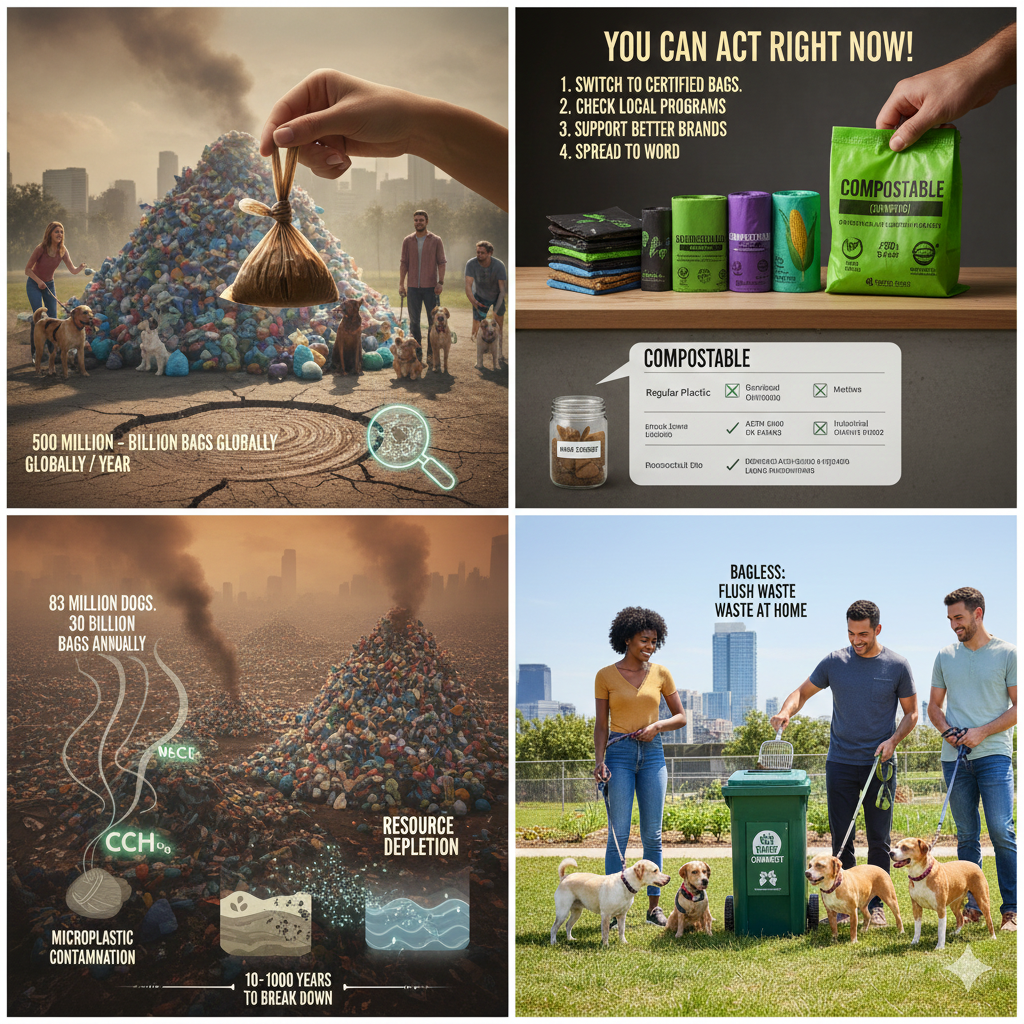
Why Dog Poop Bags Matter — The Hidden Impact of Plastic Waste is more significant than most dog owners realize. Every day, millions of pet parents scoop, tie, and toss these small bags without considering the environmental consequences. While intended to keep neighborhoods clean, dog poop bags contribute heavily to plastic pollution, microplastic contamination, and landfill overflows when made from single-use plastics. These seemingly harmless items can persist in the environment for decades, quietly harming soil, waterways, and wildlife. Understanding why these bags matter means looking beyond convenience and recognizing how small, daily choices add up. By making informed decisions and choosing sustainable alternatives, dog owners can protect both public spaces and the planet.
The Uncomfortable Truth About Your Daily Dog Walk
Here’s something nobody really talks about at the dog park: that little plastic dog poop bag dangling from your hand? It’s part of a much bigger environmental problem, one that’s quietly piling up beneath our feet.
I’ll be honest. When I first began researching this topic, I assumed it would be straightforward. Responsible dog owners pick up after their pets, end of story. We’re doing the right thing… right?
Well, yes and no.
It turns out the very tool we use to be good, considerate dog parents is creating an entirely different kind of mess.
Every day, millions of us grab those convenient little bags, scoop the poop, tie a neat knot, and drop it into the nearest trash can. Job done. But then what? Where does that bag actually go next? And what happens when you multiply that single bag by the estimated 500 million to 1 billion dog poop bags used worldwide every year?
Yeah. Sit with that number for a moment.
The uncomfortable reality is that our four-legged friends, as much as we love them, are unintentionally contributing to one of the planet’s most serious problems: plastic pollution. And we, their devoted humans, are the ones holding the weapon of choice, petroleum-based plastic bags designed to last for centuries.
But this isn’t about guilt-tripping dog owners. If you’re picking up after your dog, you’re already doing more than many people do. This is about understanding the hidden impact of our everyday choices and learning how to handle a very normal (if slightly gross) part of dog ownership in a smarter, more sustainable way.
The Staggering Scale of Dog Poop Bags Plastic Pollution
Let me paint you a picture. Imagine every dog owner in America taking their dog for a walk today. Now imagine each one using at least one plastic bag. That’s roughly 83 million dogs in the U.S. alone, conservatively generating over 30 billion dog poop bags annually just in this country.
Most traditional dog poop bags are made from high-density polyethylene (HDPE) or low-density polyethylene (LDPE), the same material used for grocery bags. These materials take anywhere from 10 to 1,000 years to break down, depending on environmental conditions. And by “break down,” I don’t mean disappear. I mean fragments into smaller and smaller pieces of plastic that contaminate soil, water systems, and eventually work their way up the food chain.
The Hidden Environmental Cost
The environmental impact extends far beyond just landfill space. Consider these often-overlooked consequences:
Microplastic Contamination: As plastic bags degrade, they release microplastics into soil and waterways. These microscopic particles have been found everywhere from Arctic ice to human bloodstreams. Dog poop bags breaking down contribute directly to this growing crisis of microplastics in soil and water.
Greenhouse Gas Emissions: When organic waste decomposes in sealed plastic bags buried in landfills, it creates anaerobic conditions that produce methane, a greenhouse gas 80 times more potent than carbon dioxide over 20 years. So yes, dog poop bags and climate change are directly connected.
Resource Depletion: Every plastic bag requires fossil fuels to manufacture. We’re literally turning ancient, non-renewable resources into single-use items designed to hold dog waste for approximately 30 seconds of your walk.
The irony? We created these bags to keep our neighborhoods clean and protect public health. Instead, we’ve traded one problem for another, and the environmental tab we’re racking up might be far more expensive than we ever imagined.
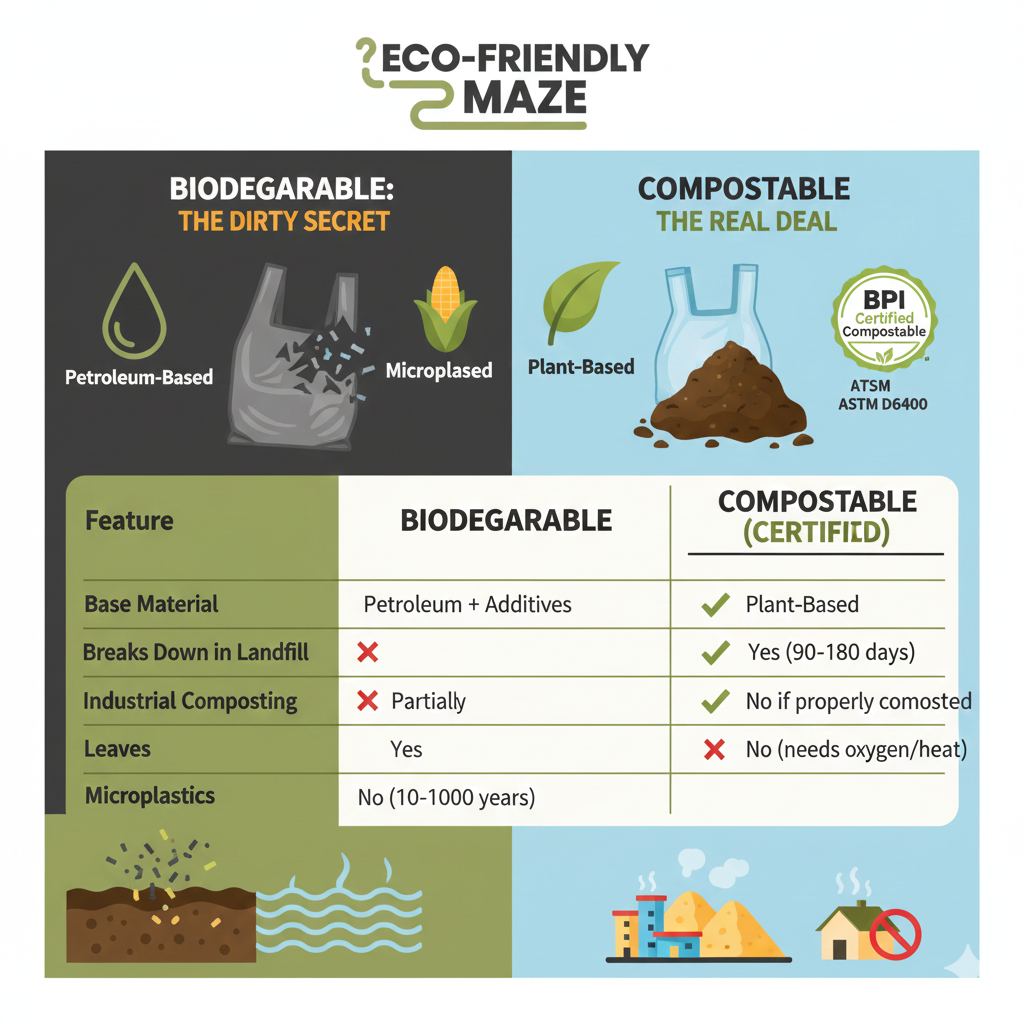
Biodegradable vs. Compostable: Understanding the Eco-Friendly Maze
So you’ve decided to go green. You’re standing in the pet store aisle, staring at packages that all scream “eco-friendly,” “biodegradable,” “plant-based,” and “compostable.” They all sound good, but what do these terms actually mean?
What “Biodegradable” Really Means (Hint: It’s Not What You Think)
Here’s the dirty secret about biodegradable dog poop bags: the term is basically meaningless without context. Technically, everything biodegrades eventually, even regular plastic will break down given enough centuries.
Many bags labeled “biodegradable” contain additives that help them fragment faster, but they’re still fundamentally made from petroleum-based plastics. They break into smaller pieces, sure, but those pieces are still plastic. You’ve just created confetti-sized pollution instead of bag-sized pollution.
The verdict: Are biodegradable dog poop bags really biodegradable? In most cases, not in any meaningful timeframe or in typical disposal conditions.
Compostable: The Real Deal (With Major Caveats)
Compostable dog poop bags are held to stricter standards. True compostable bags are typically made from plant-based materials like cornstarch, PLA (polylactic acid), or other bio-based polymers. Under the right conditions, they’ll break down into organic matter without leaving toxic residue.
But here’s the catch: Most compostable bags are certified for industrial composting facilities only. These facilities maintain temperatures of 140-160°F and specific moisture levels that allow rapid decomposition. Your backyard compost pile? Not even close.
Even more frustrating: do compostable dog poop bags actually break down in landfills? The answer is usually no. In the oxygen-deprived environment of a landfill, even compostable materials can persist for decades.
The Quick Comparison
| Feature | Regular Plastic | “Biodegradable” | Compostable (Certified) |
| Base Material | Petroleum | Petroleum + additives | Plant-based |
| Breaks Down In Landfill | No (10-1000 years) | Partially | No (needs oxygen/heat) |
| Industrial Composting | No | Sometimes | Yes (90-180 days) |
| Leaves Microplastics | Yes | Yes | No (if properly composted) |
The bottom line? Compostable bags made from plant materials are genuinely better than conventional plastic but only if you have access to proper disposal infrastructure.
Can “Eco-Friendly” Bags Still Harm the Environment?
This is where things get frustrating. You’re trying to do the right thing. You’ve switched to bags labeled “eco-friendly” or “plant-based.” But can these supposedly green alternatives still contribute to environmental problems?
Unfortunately, yes.
The Plant-Based Plastic Paradox
Many plant-based dog poop bags contain PLA, derived from corn or sugarcane. Sounds great, right? But here’s what the marketing doesn’t tell you:
- They still need industrial composting to break down properly
- Growing the crops for these materials requires land, water, fertilizers, and pesticides
- If they enter marine environments, they can still harm wildlife
- Some can contribute to microplastic pollution if they degrade in natural environments before fully breaking down
What Should Dog Owners Look For in Certifications?
If you’re serious about reducing environmental impact, here’s what to actually check:
- ASTM D6400 certification (for compostable products in the U.S.)
- EN 13432 certification (European standard for compostability)
- BPI Certification (Biodegradable Products Institute)
- Home compostable certification (if you actually plan to compost at home)
Without these certifications, you’re probably just paying extra for green-colored plastic with a guilty conscience discount.
How to Dispose of Dog Poop Bags Responsibly
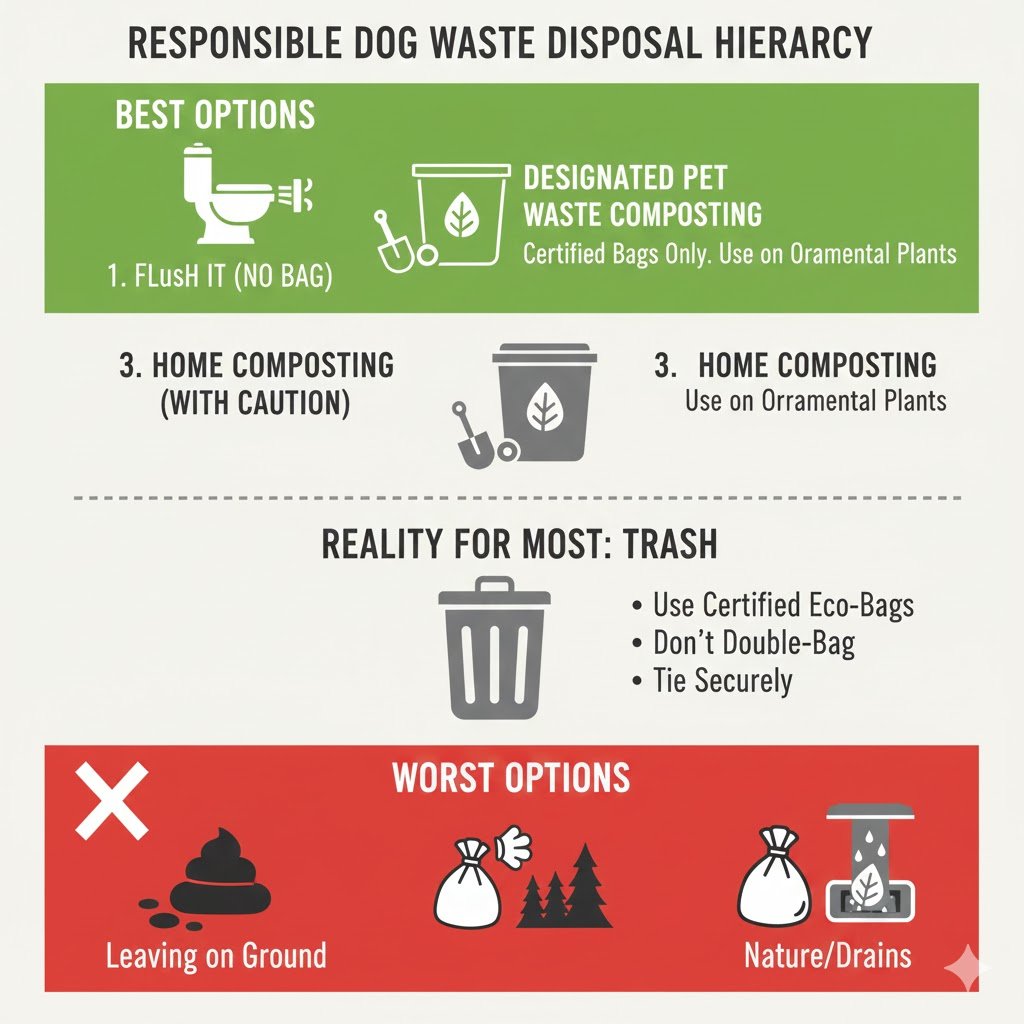
How you dispose of dog poop bags matters almost as much as what kind of bags you use. Here’s your disposal hierarchy, from best to worst:
Best Options
1. Flush It (Without the Bag) If you have access to a toilet and your municipality’s sewage system can handle it, flushing dog waste is actually one of the best options. Sewage treatment plants are designed to process organic waste, and many can capture methane for energy production.
Important: Only flush the poop itself, never the bag. Check local regulations first.
2. Designated Pet Waste Composting Some progressive cities now offer pet waste composting services or designated bins. These systems either send waste to industrial composting facilities or use in-vessel composting that reaches high enough temperatures to kill pathogens.
3. Home Composting (With Caution) Home compostable dog poop bags can work if you:
- Use a separate compost system (never mix with food compost)
- Have home compostable certified bags
- Maintain proper temperature
- Use the resulting compost only on ornamental plants, never vegetables
Reality for Most People: Trash
If none of the above options work for you, and for most people they don’t, then trash it is. But make informed choices:
- Use the most eco-friendly certified bags you can afford
- Don’t double-bag
- Tie bags securely
- Consider smaller bags to avoid excess material
Worst Options:
- ❌ Leaving it on the ground
- ❌ Tossing bagged waste into nature
- ❌ Storm drains
Beyond Bags: Real Alternatives to Plastic
What if plastic bags aren’t the only option? Let’s explore some alternatives:
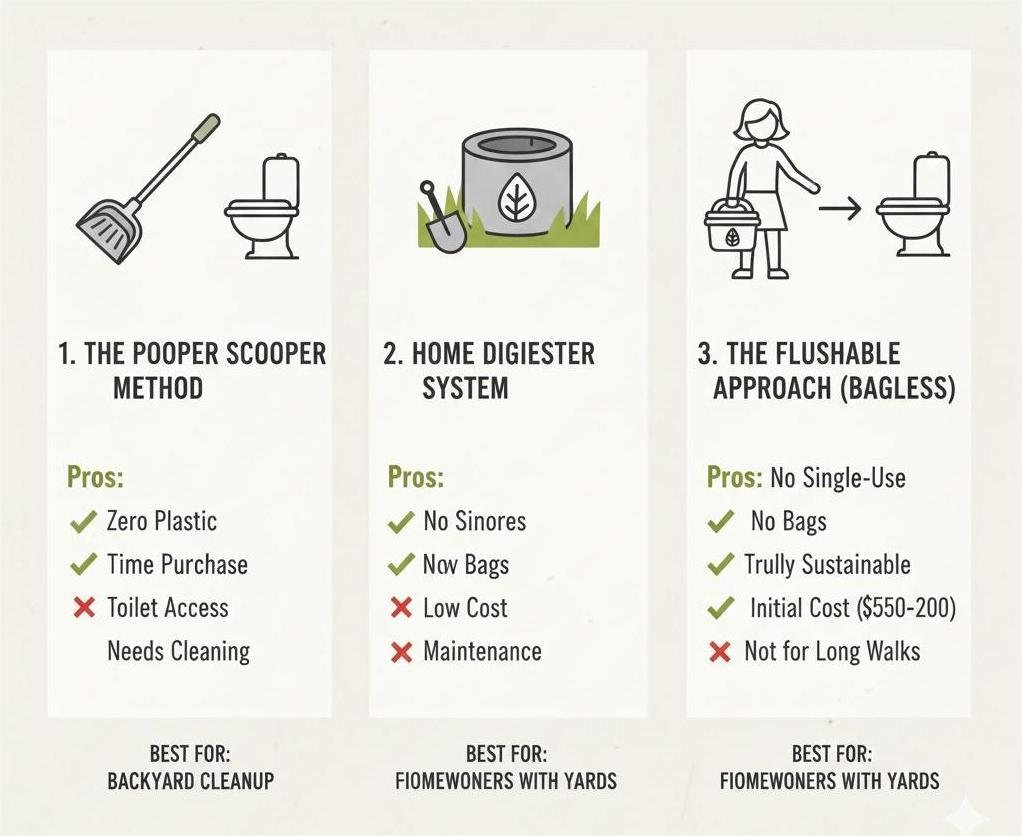
1. The Pooper Scooper Method
Use a reusable pooper scooper to pick up waste and deposit it directly into a toilet or dedicated outdoor digester.
Pros: Zero plastic waste, one-time purchase
Cons: Requires toilet access, needs cleaning, not practical for urban walks
Best for: Backyard cleanup
2. Home Dog Poop Composting Systems
Install a dedicated pet waste digester in your yard, basically a mini septic system for dog waste.
Pros: Processes waste on-site, no bags needed, low ongoing cost
Cons: Requires yard space, initial investment ($50-200), needs maintenance
Best for: Homeowners with yards
3. The Flushable Approach (Bagless)
Carry a small reusable container, scoop directly into it, return home, flush just the waste.
Pros: No single-use products, truly sustainable
Cons: Must clean the container regularly, not practical for long walks
Best for: Short neighborhood walks
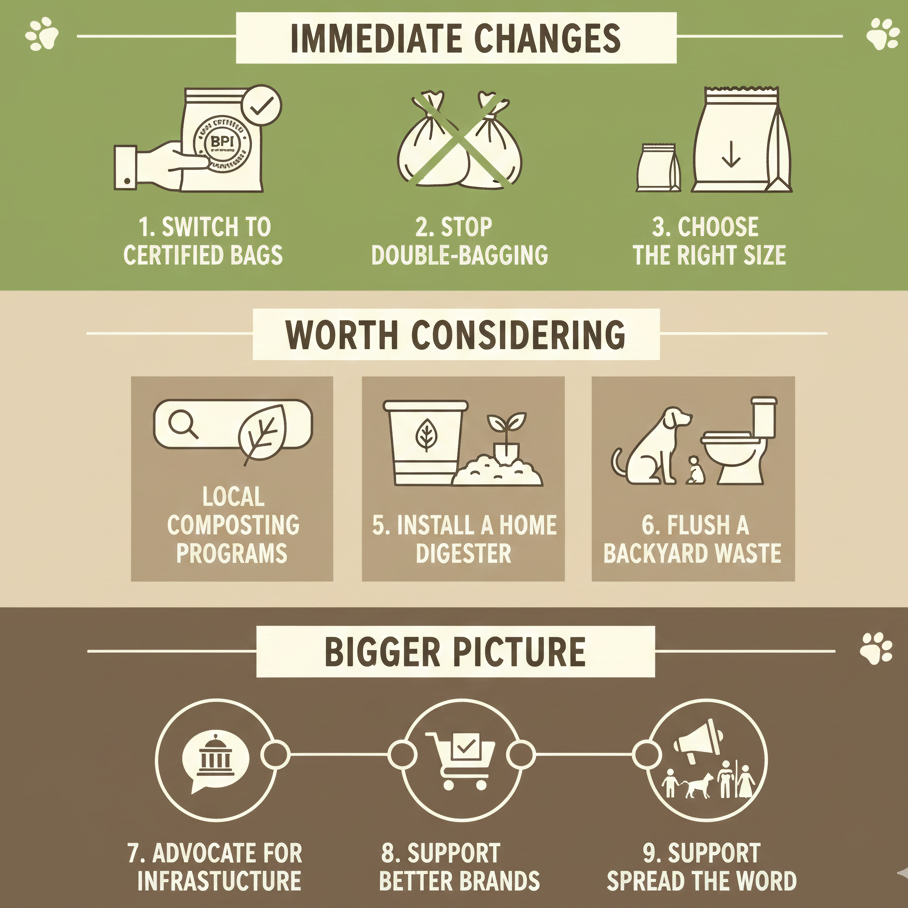
What You Can Actually Do Right Now
Enough theory. Here are practical actions you can take today:
Immediate Changes
1. Switch to Certified Compostable Bags
Even if they’ll end up in the trash, they’re still better. Look for ASTM D6400 or BPI certification.
2. Stop Double-Bagging
One bag is enough unless you own a Great Dane.
3. Choose the Right Size
Less material = less waste.
Worth Considering
4. Check for Local Composting Programs
Google “[your city] pet waste composting” and see what pops up.
5. Install a Home Digester
If you have a yard, it pays for itself in bag savings within a year.
6. Flush Backyard Waste
For poop collected in your yard, skip the bag entirely.
Bigger Picture
7. Advocate for Infrastructure
Contact your city council about municipal composting programs that accept pet waste.
8. Support Better Brands
Vote with your dollars for companies with real certifications.
9. Spread the Word
Most dog owners genuinely don’t know about these issues.
The Market Reality: Is Change Actually Happening?
The global dog poop bags market was valued at approximately $800 million in 2023 and is projected to reach $1.2 billion by 2028. But here’s what’s really interesting: the eco-friendly segment is growing even faster roughly 12-15% annually.
Consumer demand for biodegradable and compostable options is genuinely increasing, particularly among younger pet owners. Major retailers like Petco and Chewy are expanding their eco-friendly product lines.
The Challenges Remain
Infrastructure Gap: Most municipalities don’t have the composting infrastructure to handle compostable bags.
Price Barrier: Eco-friendly bags cost 2-3x more, which is prohibitive for many pet owners.
Greenwashing: Companies can slap green labels on marginally better products and charge premium prices.
Conclusion: Every Bag Matters
We started with a simple question: Why do dog poop bags matter? By now, the answer is clear.
They matter because 500 million to 1 billion bags a year creates significant environmental impact. They matter because plastic pollution doesn’t disappear it just breaks into smaller pieces. They matter because the choices we make today create consequences we’ll be dealing with for centuries.
Key takeaways:
- Traditional plastic bags contribute to pollution and climate change
- “Biodegradable” labels are often misleading
- Proper disposal matters as much as bag choice
- Better options exist, but infrastructure is limited
- Perfect solutions don’t exist yet, but progress is possible
Your next steps:
- Assess what disposal infrastructure you have access to
- Choose certified compostable if you can compost, recycled plastic if you can’t
- Optimize your disposal method
- Advocate for better municipal programs
- Share what you’ve learned
The perfect solution doesn’t exist yet and maybe it never will. But incremental progress, multiplied across millions of pet owners, creates real change.
So the next time you reach for that little plastic bag, you’ll know exactly what you’re holding: a small choice that’s part of a much bigger conversation about how we live on this planet.
Now it’s your turn: What changes are you going to make? Because the only thing better than one person making better choices is an entire community doing it together.
At ZeroWastePaws, we advocate for mindful pet parenting that balances convenience, care, and responsibility. Together, we can transform everyday habits into eco-conscious actions.
Frequently Asked Questions
1. Why do dog poop bags matter for the environment?
Dog poop bags matter because billions are used yearly, most made of petroleum-based plastic that takes centuries to break down, adding to plastic pollution, microplastics, and greenhouse gas emissions.
2. How much plastic waste do dog poop bags produce globally?
Globally, dog poop bags create an estimated 500 million to 1 billion bags of plastic waste annually. In the U.S. alone, over 30 billion bags are used each year.
3. Are biodegradable dog poop bags truly better than regular plastic bags?
Not always. Many biodegradable bags are still petroleum-based and fragment into microplastics. True compostable bags made from plant materials are better but need industrial composting to break down properly.
4. What’s the difference between biodegradable and compostable dog poop bags?
Biodegradable bags may break into microplastics over time, while compostable bags are plant-based and decompose fully in industrial composting within 90–180 days.
5. Do compostable dog poop bags break down in landfills?
No. Landfills lack oxygen and heat, so compostable bags don’t decompose properly there they require industrial composting facilities to break down completely.
6. How can dog owners dispose of poop bags more responsibly?
Best options include flushing waste (without the bag) if allowed, using designated pet composting programs, or using certified compostable bags in regular trash.
Stay tuned for Part 2: Types of Dog Poop Bags: Biodegradable, Compostable & Beyond
— coming next!